How Offset Printing Works: Plates, CMYK, Press Run and Finishing
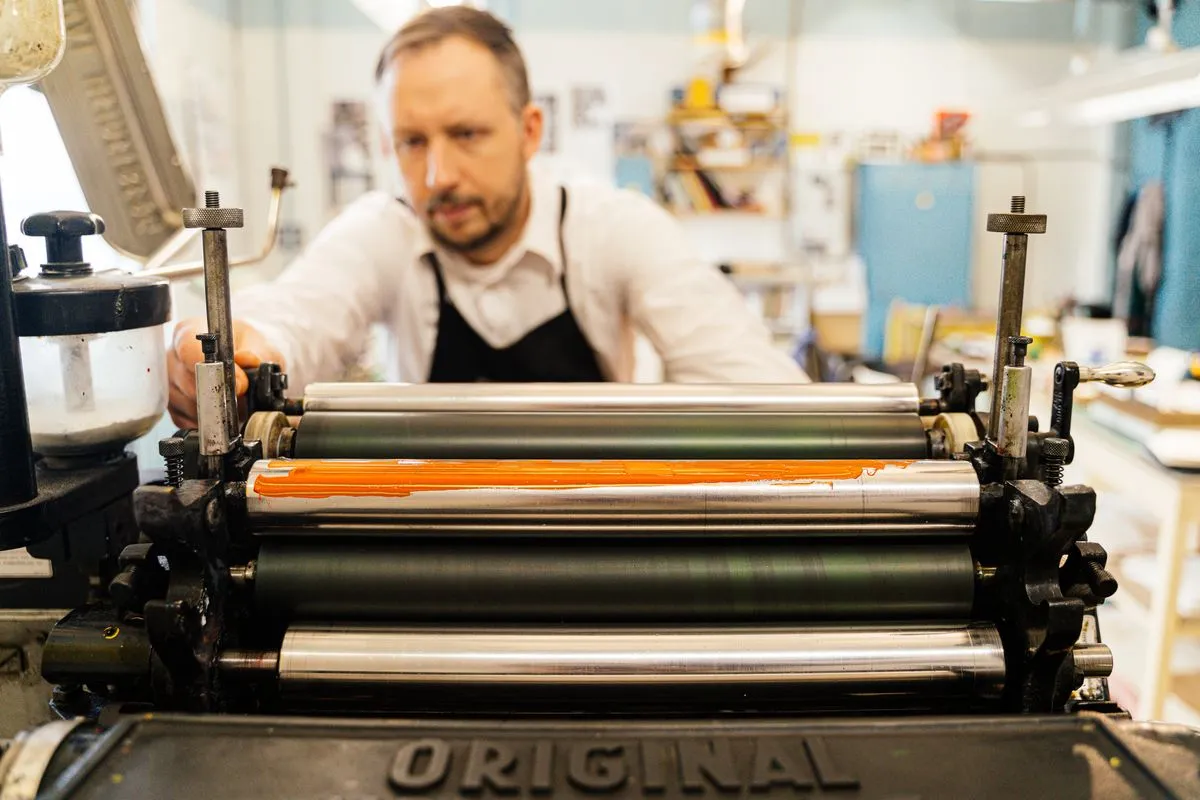
Quick answer: Offset printing makes a metal plate for each ink colour, transfers the inked image from the plate to a rubber blanket and then to the paper, and repeats for cyan, magenta, yellow and black (CMYK). Plates and press setup are the fixed cost, so offset becomes cheaper per copy as quantity rises. Typical use is brochures, books, catalogues, letterheads and printed cartons.
Searches for "offset printing" and "offset printing machine" are among the steady printing queries in Nepal. This guide explains each step so you can read an offset quotation and ask the right questions. For a comparison with digital, read digital vs offset printing in Nepal.
Step 1: Prepress (the file)
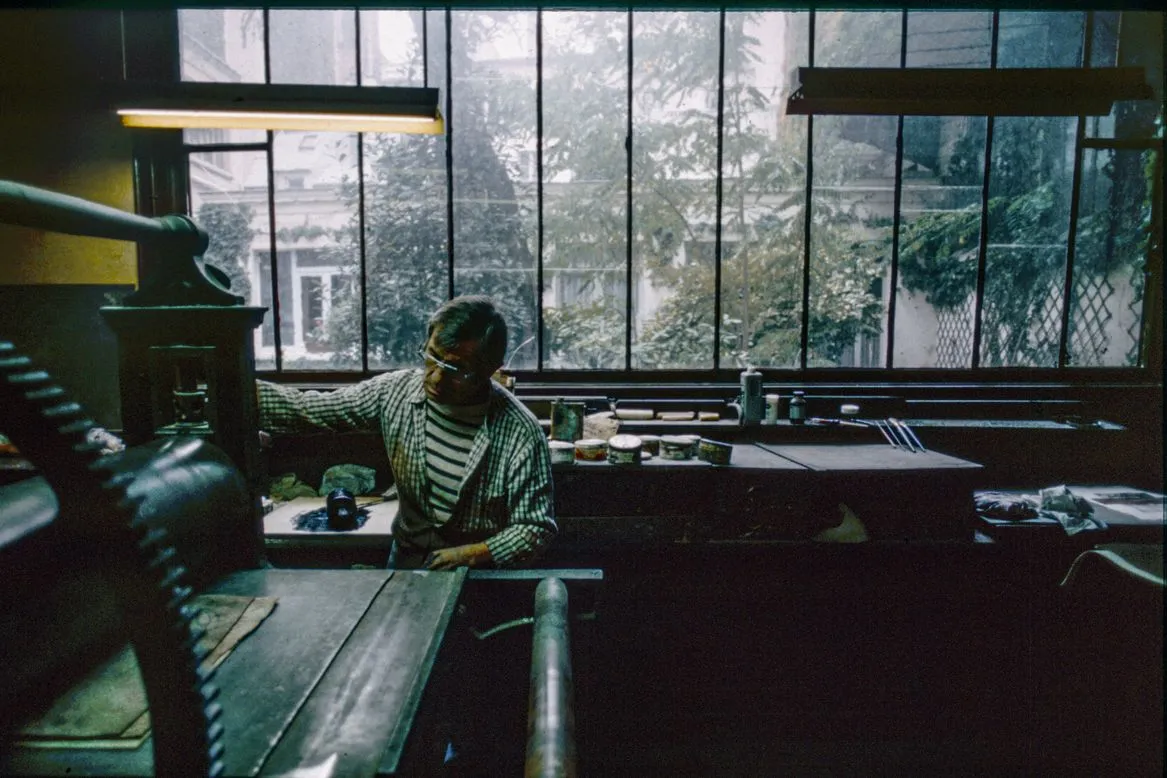
Before anything prints, someone checks the file: page size, 3 mm bleed, fonts, image resolution and colour mode. Prepress also arranges pages into imposition, which means placing several pages on one large sheet in the order they will be folded and cut. Mistakes found here cost almost nothing. Mistakes found after plates are made cost a remake. See how to prepare artwork for printing.
Step 2: Colour separation and plate making
The file is separated into four colours: cyan, magenta, yellow and black. Each becomes a separate image on a thin metal plate. Modern shops write the image on the plate directly from the computer, a method called computer-to-plate (CTP). A spot colour, such as a brand Pantone, adds a fifth plate. See CMYK vs Pantone.
Video: CMYK 4 Color Offset Printing, by Paul Hendley (third-party demonstration)
Step 3: The press run
On the press, each plate sits on a cylinder. Water and ink are applied to the plate so that only the image area holds ink. The inked image transfers to a rubber blanket, and the blanket presses it onto the paper. That indirect transfer is why the process is called offset. A four-colour press prints all four colours in one pass; a smaller press may need several passes.
The operator adjusts ink and water balance, checks registration (how exactly the colours line up) and pulls proof sheets until the colour matches the approved proof. The first sheets are waste, which is part of setup cost.
Video: How Lithographic Offset Printing Works, by Jester Tech Design and Multimedia (third-party demonstration)
Step 4: Drying and finishing
Sheets dry before they are handled. Then finishing begins:
- Cutting to the finished size.
- Folding for brochures and leaflets.
- Lamination or varnish, including spot UV for selected areas. See matte, gloss and spot UV.
- Binding for books and catalogues. See book printing in Nepal.
- Die-cutting and gluing for boxes and cartons.
What drives offset cost
| Cost element | Why it matters |
|---|---|
| Plates | One per colour per side; fixed whatever the quantity |
| Makeready | Time and paper used to set up and match colour |
| Paper | Size, type and GSM; see the GSM guide |
| Ink and colours | Four colours standard; each extra spot colour adds cost |
| Press time | Run speed and sheet size |
| Finishing | Cutting, folding, lamination, binding, die-cutting |
Because plates and makeready are fixed, doubling the quantity does not double the price. That is the main reason offset suits larger runs. There is no fixed quantity at which offset becomes cheaper than digital, so ask for both quotes on one specification.
What offset does well
- Consistent colour across a long run.
- Wide choice of paper, from thin to heavy card.
- Spot colours, metallic inks and coatings.
- Large formats and high quantities.
Where offset is not the best choice
- One or two copies, or a job that must start today.
- Personalised items where every copy differs.
- Jobs where the file may still change after plates are made.
For those, see the digital printing guide.
Checklist before approving an offset job
- Final file with bleed, fonts outlined and images at 300 dpi
- Paper name and GSM confirmed
- Number of colours and any spot colours
- Finishing listed: cut, fold, lamination, binding
- Digital proof approved; printed proof if colour is critical
- Quantity, delivery date and place agreed in writing
Frequently asked questions
Why is it called offset?
The ink is not printed directly from the plate to the paper. It is offset to a rubber blanket first.
Is offset better than digital?
Neither is always better. Offset gives lower cost per copy at volume and wider stock choice. Digital gives faster start and variable data. See what is printing.
What is a plate and can it be reused?
A plate carries one colour of one page layout. A plate can be kept for a reprint of the same layout, but any change needs a new plate.
How long does an offset job take?
It depends on workload, finishing and drying. Ask for a date in the quotation rather than assuming.
Request an offset quote
See Thankyooou's offset printing services and brochure and pamphlet printing, then send your brief.
Sources
- Offset printing — Britannica — plate, blanket and paper transfer.
- ISO paper sizes — Markus Kuhn, University of Cambridge — A-series sheet sizes.