Mailer Boxes for E-commerce Packaging in Nepal
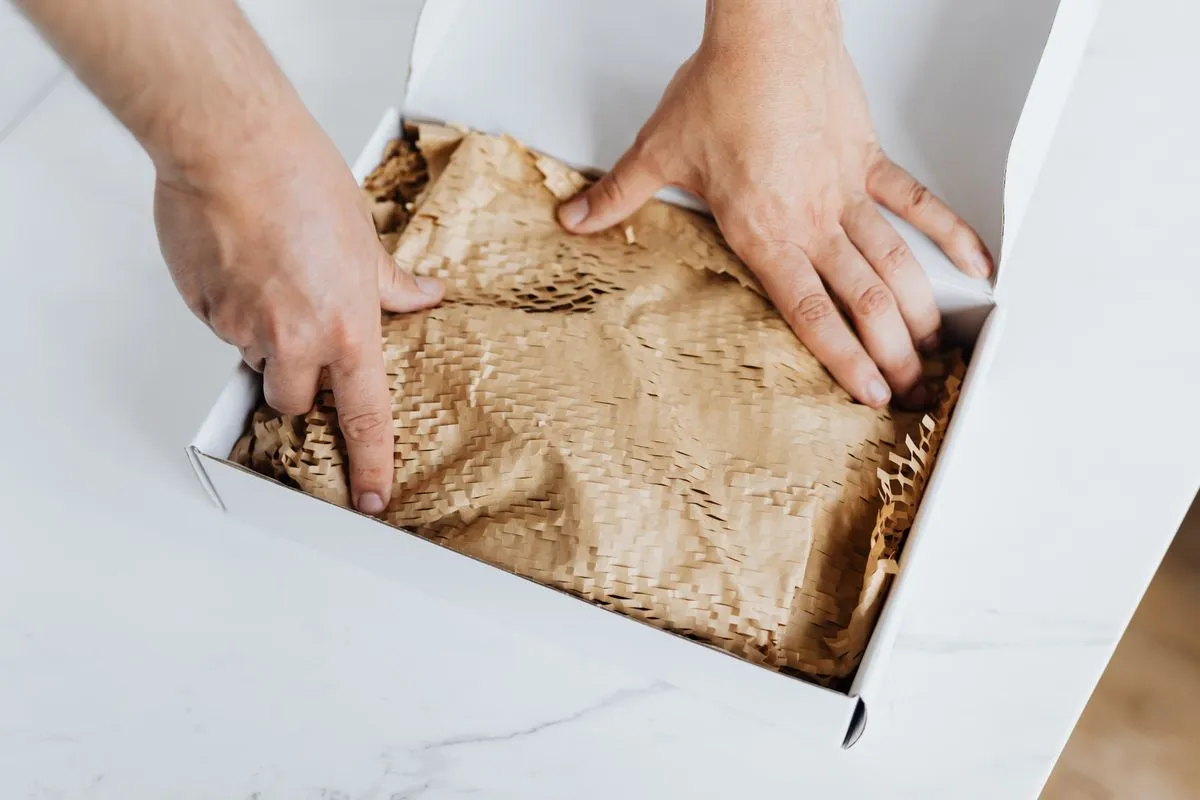
Quick answer: For online orders use a corrugated mailer box sized to the product's internal dimensions plus room for padding, strong enough to survive courier handling, and branded on the outside or with a printed insert. Measure the product, choose the box by internal size (length × width × height), and test one sample through a real delivery before you order a full run.
Online sellers lose money on damaged parcels and oversized boxes. A box that fits closely protects the product and keeps the parcel small.
Measure the box correctly
- Measure the product at its longest, widest and tallest points, with accessories.
- Add room for padding: about 10 to 20 mm per side for sturdy items, more for fragile ones.
- State the size as internal length × width × height. Printers and box makers use internal size for fit.
- Weigh the packed product. Heavier items need stronger board.

Choose the box type
| Type | Best for | Notes |
|---|---|---|
| Corrugated mailer | Apparel, accessories, books, gifts | Self-locking, ships flat |
| Corrugated shipper (RSC) | Heavier or irregular goods | Stronger, no pre-folded lid |
| Folding carton with outer carton | Cosmetics, small retail products | Carton gives the brand look, outer box protects |
| Rigid gift box in outer carton | Premium gifting | Highest presentation, highest cost |
Public listings checked on 10 November 2026 show plain 2 mm corrugated cubes from NPR 29 for 6-inch to NPR 53 for 12-inch. These are not printed custom boxes; see custom packaging boxes in Nepal for the caveats.
Branding that works on a mailer
- Outside print: one or two colours of your logo costs less than full colour on every face.
- Inside print: a message or pattern inside the lid gives an unboxing moment.
- Inserts: a thank-you card or hang tag adds branding without printing the whole box.
- Stickers: a printed label or sticker can brand a plain box in small runs.
Test before you scale
Pack one sample as you would for a real order, ship it by your usual courier, and check for crush, bulge and product movement. If the product moves, add padding or reduce box size.
Quote checklist
- Internal dimensions and product weight
- Box style and board (single or double wall)
- Print: colours and which faces
- Quantities at two levels
- Inserts, tape and labels needed
- Delivery location and date
A worked example: sizing a box
Say your product is a folded shirt in a poly bag that measures 30 × 22 × 4 cm.
- Product size: 30 × 22 × 4 cm.
- Add padding: about 1 cm per side for a sturdy item, which adds 2 cm to each dimension. The internal size becomes 32 × 24 × 6 cm.
- Add an insert or tissue: a thin tissue layer can add another 0.5 to 1 cm in height, so choose 32 × 24 × 7 cm.
- Check the outer size: board thickness adds a few millimetres on each side, which matters for courier size bands.
- Check weight: add the box and packaging to the product weight and compare with your courier's limit.
If you find a standard box within 1 cm of this internal size, it may be the cheaper choice. If standard sizes leave large gaps, a custom size saves filler and shipping cost.
Courier handling tests
Before ordering a full run, pack one sample and test it:
- Drop test: a controlled drop from waist height onto each face and corner.
- Squeeze test: press the sides and top to see if the product shifts or the box buckles.
- Shake test: shake the packed box and listen for movement.
- Courier test: ship one to yourself or a friend by your usual courier and check on arrival.
Note the failures and adjust the size, the board or the padding.
Protection options
| Item | Use |
|---|---|
| Paper filler (crinkle or kraft) | Light protection and a neat look |
| Moulded pulp or card insert | Holds fragile items in place |
| Bubble wrap | Extra protection for fragile items |
| Tissue paper | Presentation and scratch protection |
| Corrugated divider | Separates multiple items |
| Tape and tamper seal | Closes the box and shows if it was opened |
Choose the lightest protection that passes the test, to keep shipping cost down.
Branding points that cost little
- One-colour print outside, for example a logo on the lid.
- A printed sticker or label on a plain box. See sticker prices.
- A printed card inside with a thank-you note and order details.
- A branded tape across the seam.
- Tissue with a pattern inside.
These give the unboxing a brand feel without printing the whole box.
Reducing waste and returns
- Match box size to product size to avoid void fill.
- Use recyclable paper-based fillers.
- Do not claim eco benefits unless you can support them; the Consumer Protection Act, 2075 prohibits false or misleading advertising.
- Track damaged parcels and adjust the packaging.
Ordering stages
- Prototype: a plain sample in the planned size.
- Test shipment: at least one real parcel.
- Small branded run: a few hundred boxes.
- Full order: after you confirm fit, strength and brand look.
See how to choose custom packaging and packaging design for retail and ecommerce.
Frequently asked questions
Should I buy a standard size or custom size?
A standard size is cheaper for small runs. Custom size pays off when a standard size leaves too much empty space.
Does printing weaken the box?
Print does not change board strength, but heavy ink coverage and cuts can affect fold quality.
Can I print a few boxes first?
Ask for a small sample run before committing, and compare the quote for sample and full quantities.
Get packaging for online orders
See packaging design for retail and ecommerce, the D2C mailer bag and contact Thankyooou.
Related guides
Sources
- Print Pasal plain corrugated cube listings, checked 10 November 2026 — plain 2 mm corrugated cubes, NPR 29 to NPR 53.